Commercial concrete contractors in Little Rock, AR

Poured around your operating hours, documented to the PSI and thickness your engineer specified, signed off before the crew leaves.

Concrete for a schedule you do not control

You get a slab poured to the spec your engineer signed off on, on the day your schedule says it has to happen.

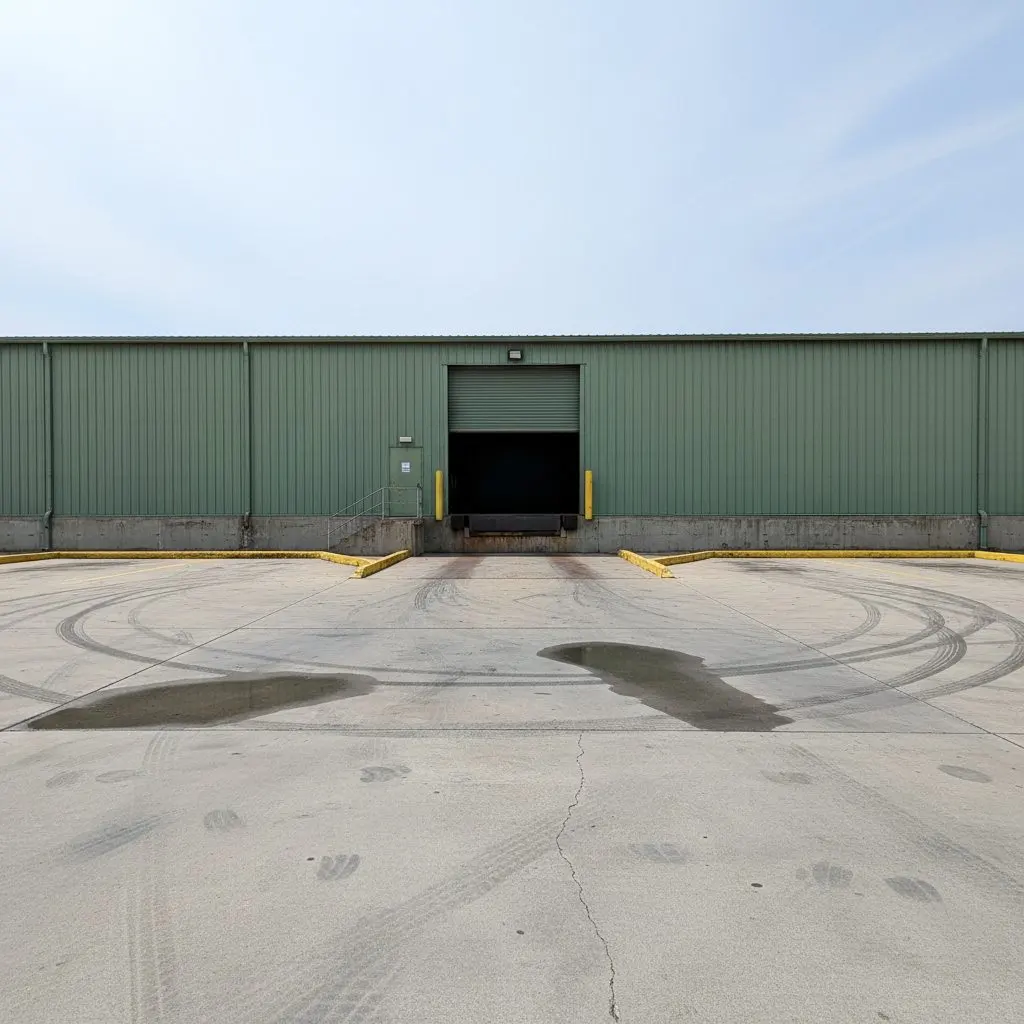
A wide commercial concrete apron outside a loading dock, tire marks and a painted edge line, the dock leveler and roll door behind it.

Little Rock Concrete Elite is a concrete contractor working commercial jobs across Little Rock and central Arkansas since 2011, fifteen years of pads, aprons and tenant improvements, with new jobs typically starting inside two weeks.

Loading docks and truck aprons, parking areas and pads, tenant improvement slabs, sidewalks and ADA ramps, and repair or resurfacing work on an active property make up most of the commercial book.

Every pour runs to the mix, thickness and reinforcement an engineer or a property manager specifies, four inches over a compacted base as a baseline, a 4,000 PSI mix, fiber reinforced, with control joints cut within twenty-four hours at four times the slab depth, documented for the file.

How small a job is worth calling about, and how big is too big? A single cracked apron at one storefront counts, and so does a multi-phase pour for a general contractor, and the same crew handles both.

Call (501) 555-0168 for a free estimate. You go from a schedule that depends on a subcontractor showing up to one where the concrete is the part you stop worrying about.

What a commercial pour has to prove

A commercial job is judged on documentation and timing, not just the finished slab.

A homeowner asks what a driveway will look like. A facilities manager or a general contractor asks whether the mix ticket matches the spec, whether the crew can work around business hours, and who signs off before the next trade moves in.

That means paperwork a residential job never generates, a compaction record, a delivery ticket showing the PSI actually poured, photos of the reinforcement before the concrete covers it, and a schedule built around when the site can actually be closed rather than when the crew is free.

  • Pours scheduled around your business hours, not ours
  • Delivery tickets and PSI documentation kept on file
  • Engineer-stamped drawings followed to the joint layout
  • Certificate of insurance issued before crews are on site
  • Phased pours coordinated with other trades on site
  • One point of contact for the property manager or GC
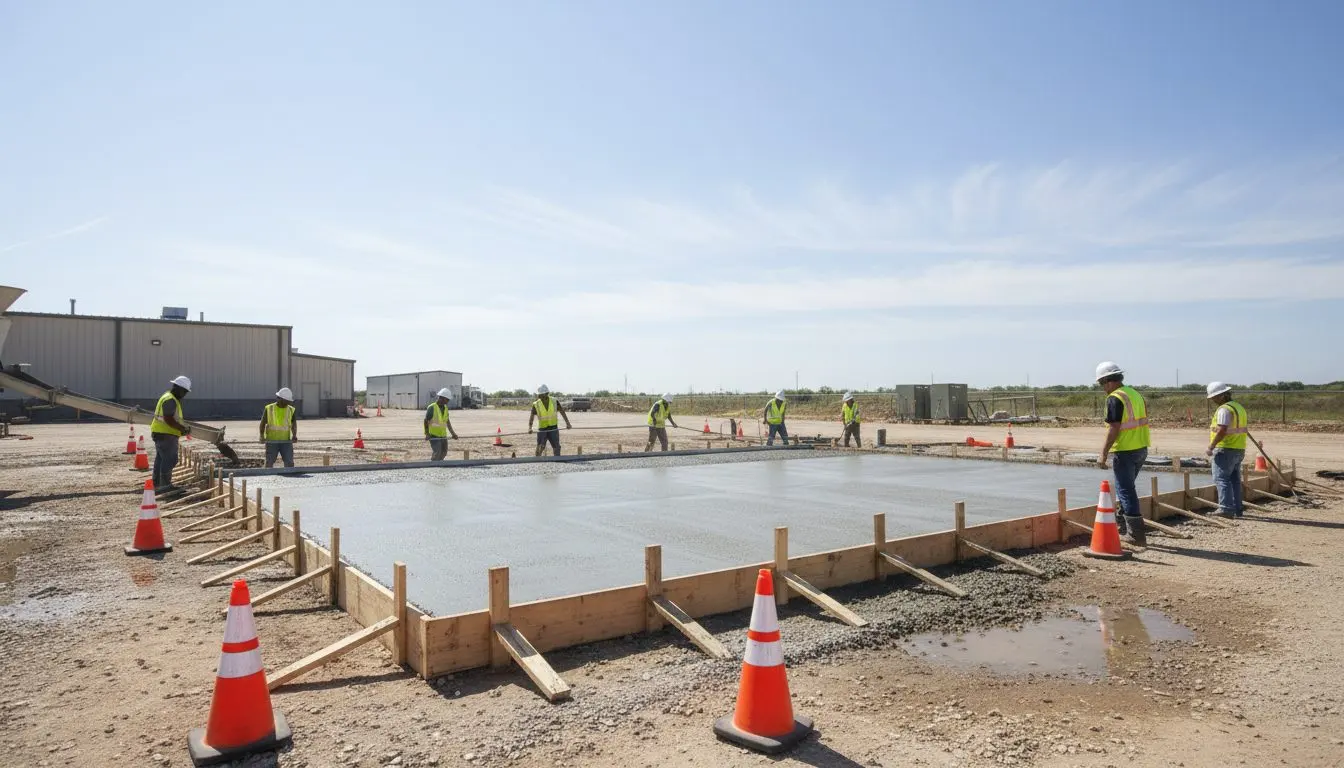
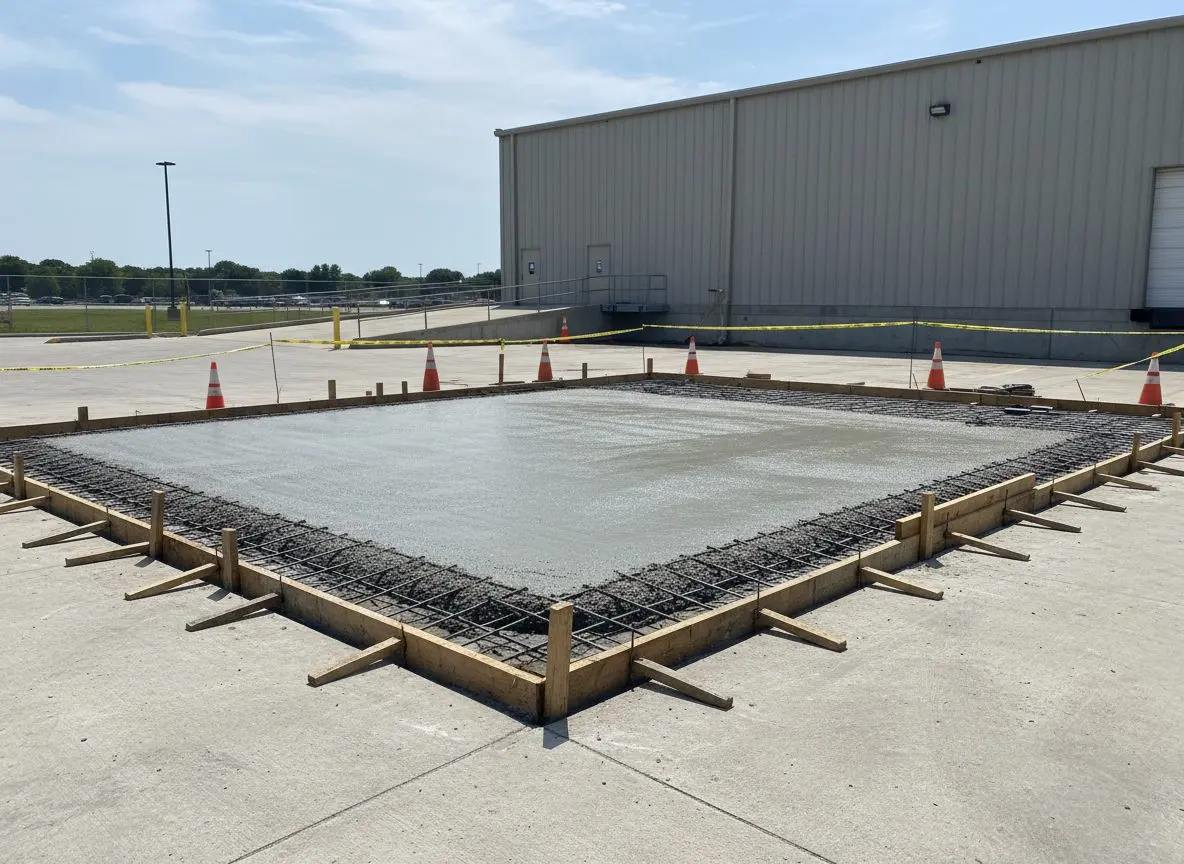
A commercial apron or loading dock pour in progress, forms and reinforcement visible, safety cones marking a barricaded work zone.
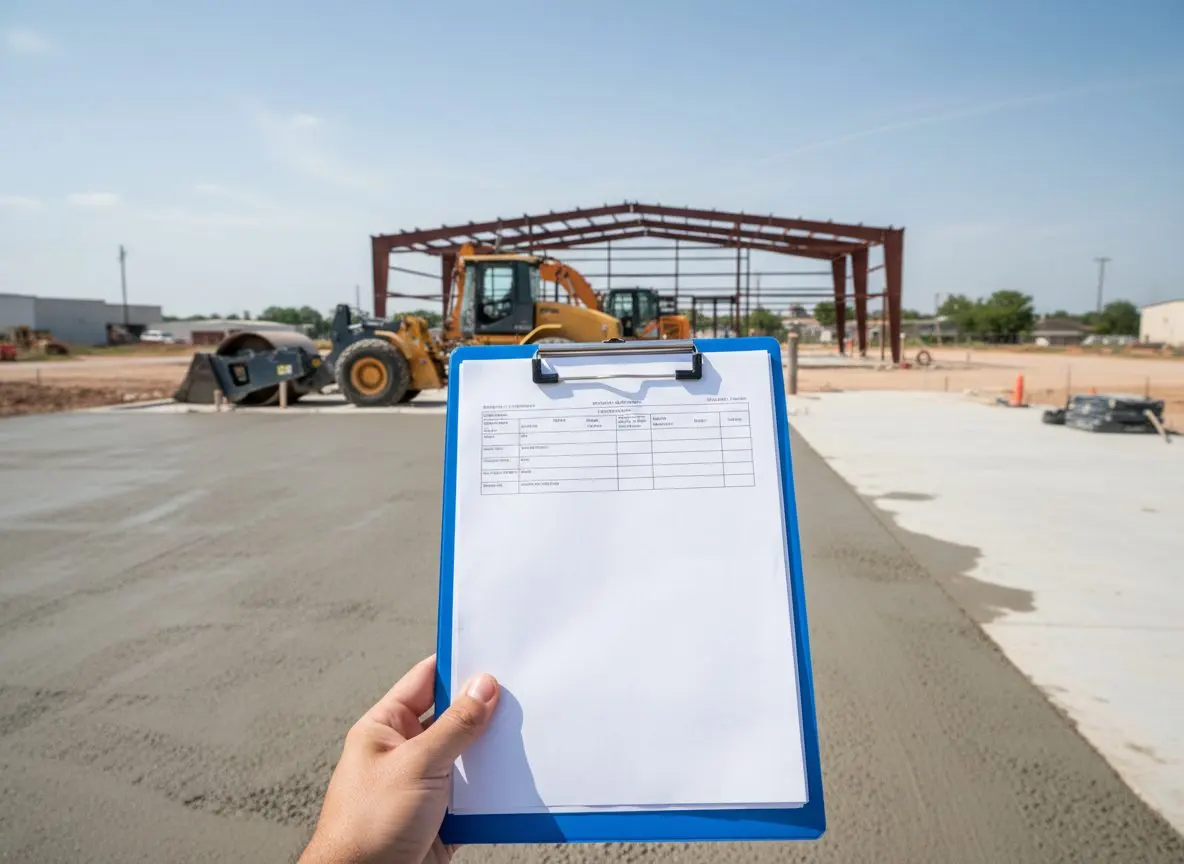
A delivery ticket or compaction record being checked against a clipboard on an active commercial job site.

Services

Pads, aprons and slabs, poured to the spec you hold

Commercial Residential
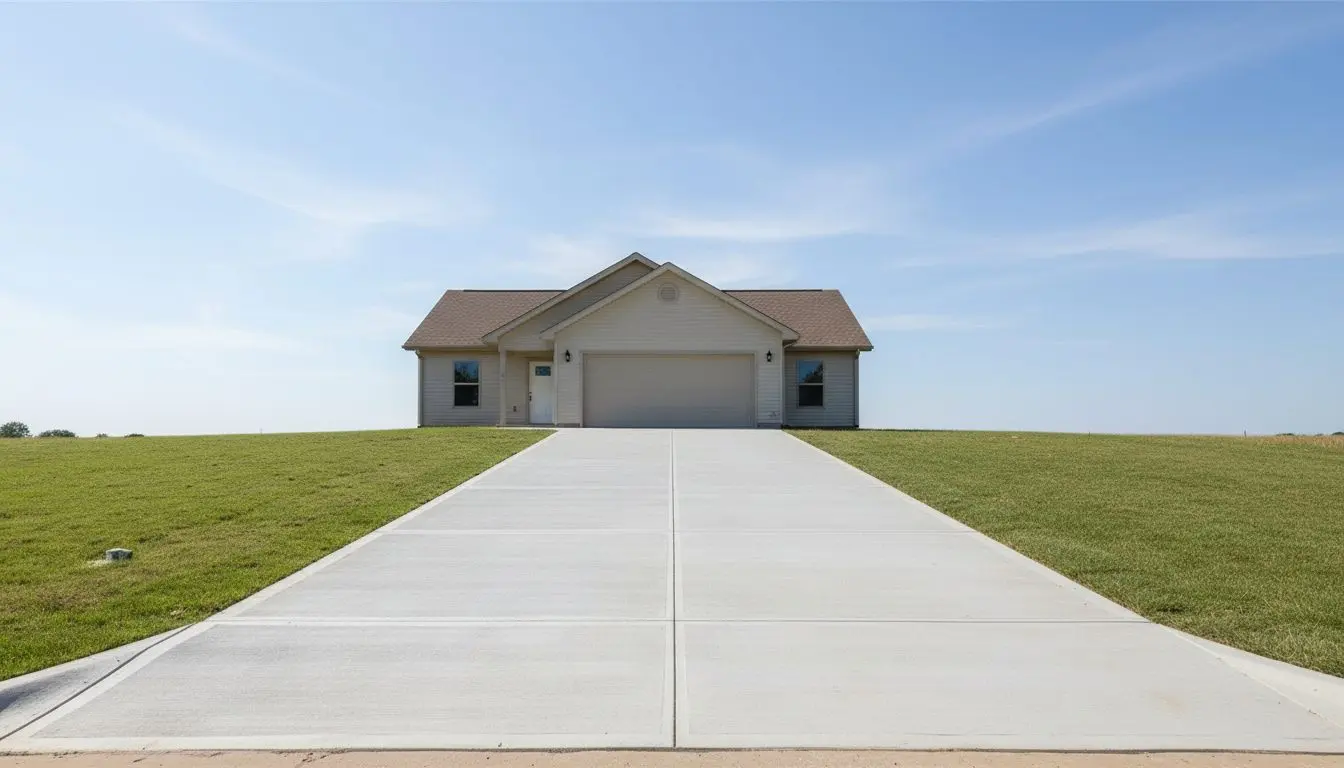
  • A freshly poured concrete driveway running from the street to a garage, broom finished and still curing, wood forms standing along one edge.

    Driveways and Parking

    For a homeowner replacing a driveway that has cracked along the same line every summer since it went in, or a family adding a second pad for a teenager's first car. A driveway carries real weight every day, so the base and the reinforcement underneath matter more here than the finish on top, and getting them wrong is expensive to redo once a slab is down.

    Learn more about Driveways and Parking
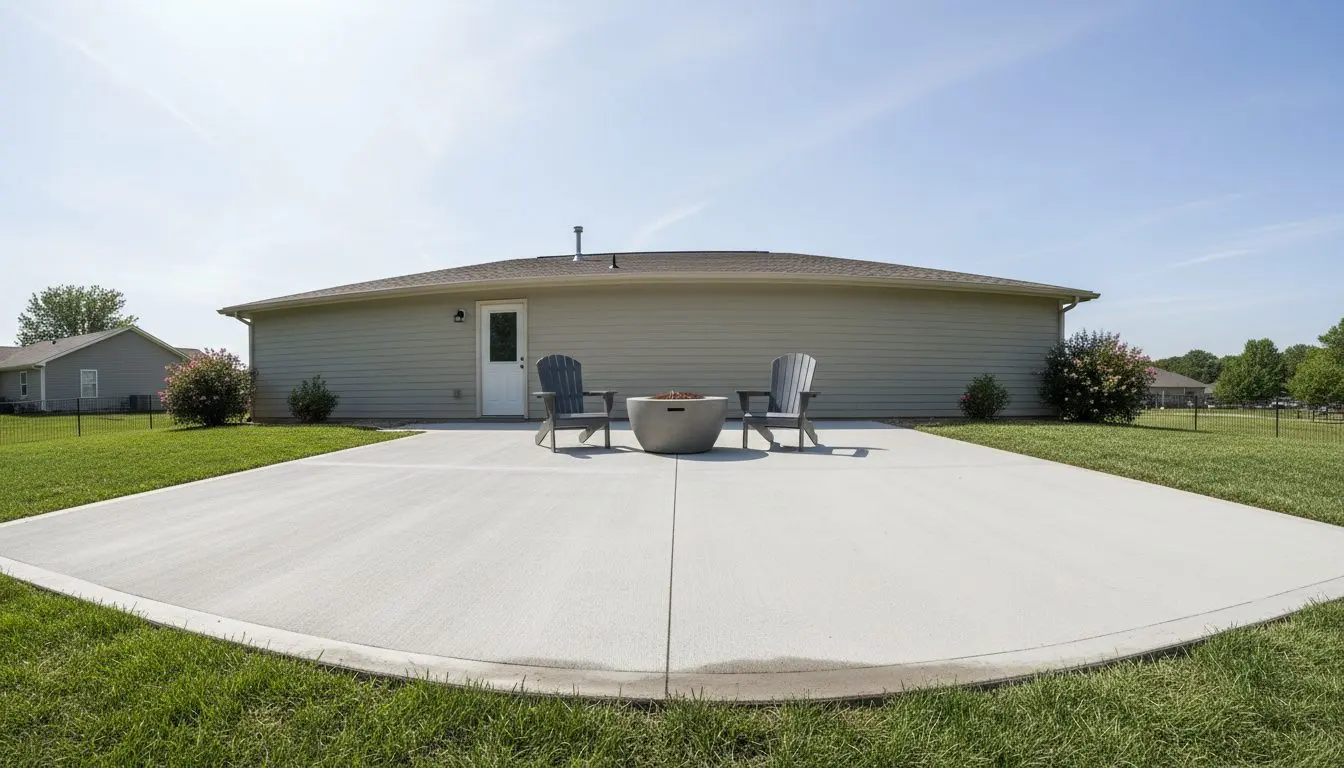
  • A finished concrete patio behind a house, poured flush against a back door with outdoor furniture set on it, broom finished with a lawn edge around it.

    Patios and Walkways

    For a family who wants somewhere to put a table and chairs that does not turn to mud after a storm, or somebody replacing a patio that has pooled water against the back door for years. A patio only has to carry people and furniture, so the drainage fall and the finish decide how it holds up over time, not the thickness underneath it.

    Learn more about Patios and Walkways
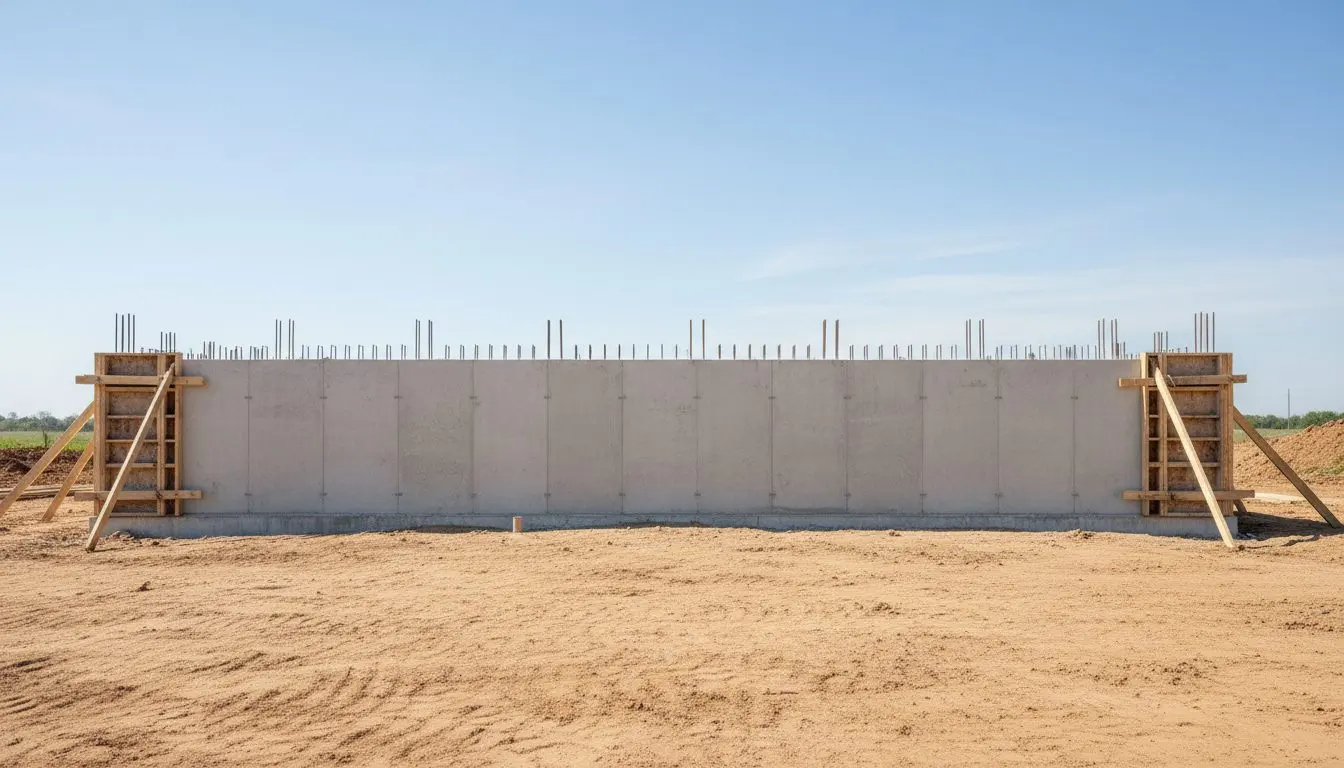
  • A poured concrete footing and foundation wall on a residential job site, formwork freshly stripped and rebar visible at the edge.

    Foundations and Slabs

    For homeowners adding a garage, workshop or sunroom, and builders who need a foundation poured, inspected and ready for framing on a fixed schedule. Every footing and slab is designed to the soil underneath it rather than to a standard drawing, because a foundation that ignores Little Rock's clay settles within a few seasons.

    Learn more about Foundations and Slabs
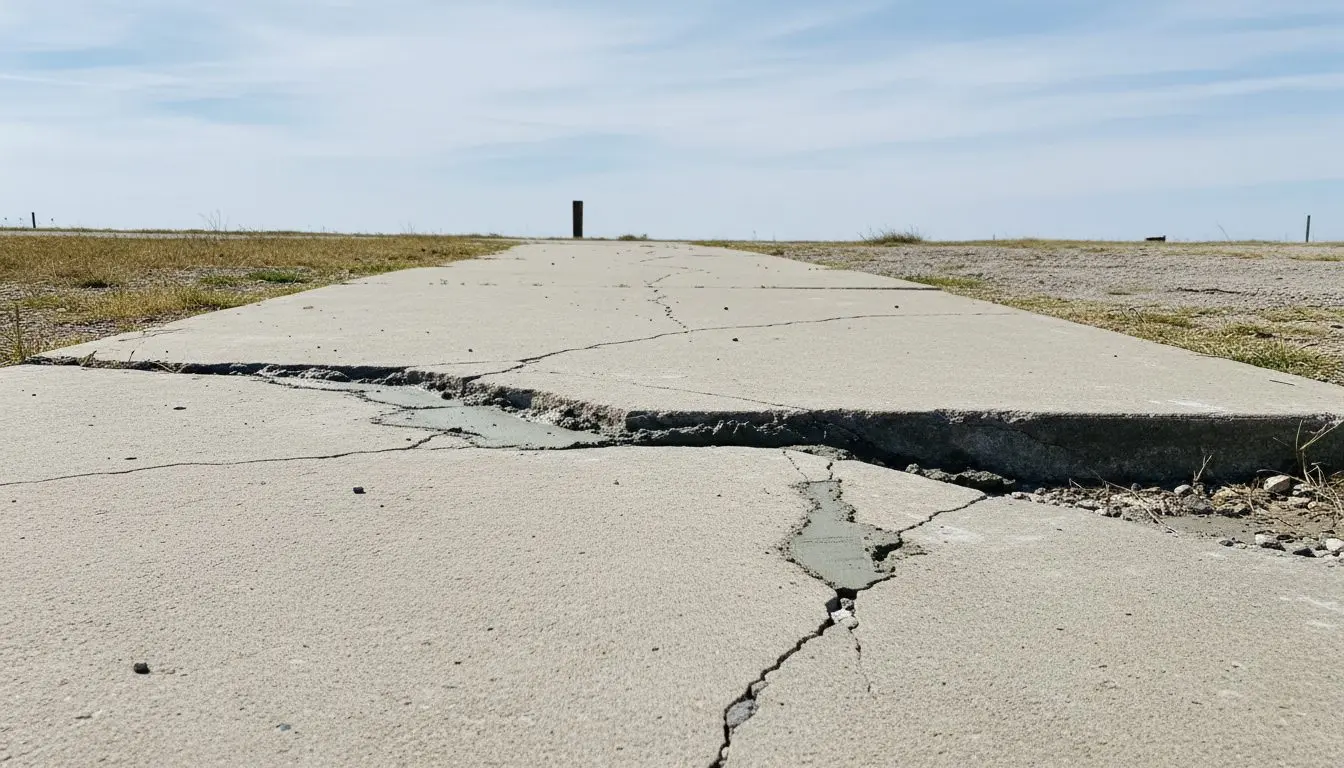
  • A cracked or unevenly settled concrete driveway or walkway before repair, the damage clearly visible in flat daylight.

    Concrete Repair

    For homeowners with a driveway that has sunk at one edge, and sellers who need a cracked walkway fixed before a home inspection finds it first. Every repair starts with a straight answer about what actually failed, and polyurethane foam leveling or epoxy crack injection is used wherever the concrete underneath is still sound, rather than defaulting to a full replacement.

    Learn more about Concrete Repair
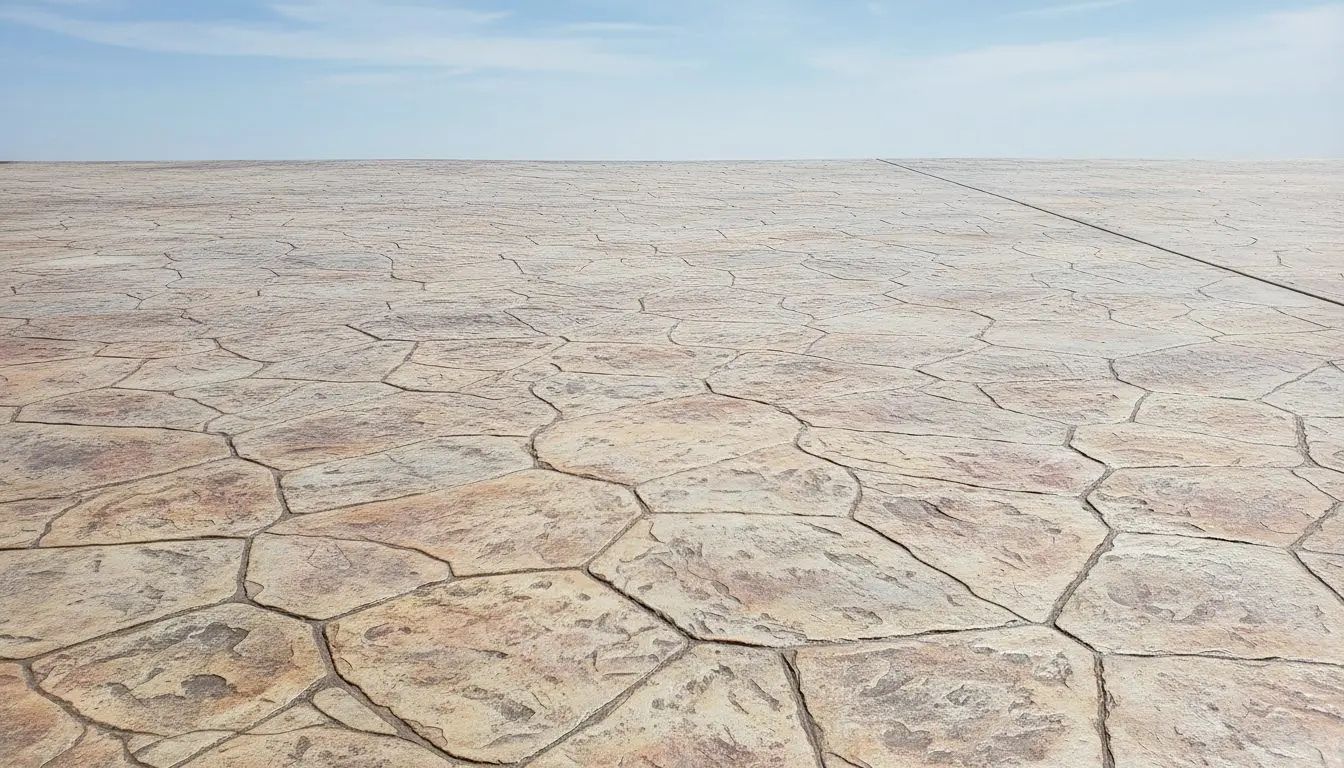
  • A finished stamped or stained concrete patio or driveway, the texture and color pattern clearly visible in flat daylight.

    Decorative Concrete

    For homeowners replacing a plain patio with something they will actually want photographed, and for anyone upgrading a driveway or pool deck before listing the house. Every pattern is stamped true and every finish sealed with a product built for Arkansas sun, because a stamped surface that fades or chalks within a year is worse than a plain one that never promised color to begin with.

    Learn more about Decorative Concrete

From your call to a cured slab

Most driveways and patios run five to ten days from the first call to a slab you can park or walk on.

  1. Call and a free estimate

    Same day

    We talk through the job on the phone, then walk the site with you. We measure the area, check grade and access for a truck, and note anything the clay soil or drainage will affect.

  2. Mix and design agreed

    One to two days

    You get a written quote naming the mix strength, the slab thickness, the reinforcement and where the control joints will sit, so nothing about the pour is decided on the day.

  3. Excavation and base prep

    One to two days

    Old material comes out, the ground is graded to fall away from the house, and a compacted base goes down before a single form is set. This is where a bad clay base fails later.

  4. The pour and screed

    One day

    Concrete goes in, screeded level and floated while it is still workable. Arkansas heat sets a load fast, so the crew works the whole slab in one continuous pour.

  5. Finish and cure

    Three to seven days

    Broom, stamp or exposed aggregate goes on while the surface is still workable, then the slab is covered and cured out of the sun before it takes any weight.

  6. Joints cut, site cleared

    Within a day

    Control joints are saw cut to the correct depth so the slab cracks where it is told to, not where the clay underneath decides. Forms come up and the site is left clean.

Call Little Rock Concrete Elite for a free estimate, or ask for a callback the same day.

Get a free quote

Why do two driveways the same size cost different amounts?

The steps above are the same on every job. What moves the number is the ground underneath, how the old surface comes out, and the finish you choose.

Site access
A driveway a truck can back up to pours in one load. A patio reached only through a side gate means barrowing concrete in by hand, which adds crew time to the same square footage.
Removing the old surface
A new pour over prepared ground costs less than one that starts with breaking out an old driveway or patio, hauling the debris away and disposing of it before any new base goes down.
Base and soil prep
Little Rock clay swells and shrinks with the season, so a base that will actually hold a slab flat needs more excavation and compaction than a site sitting on stable ground.
Thickness and reinforcement
A patio and a driveway are not poured to the same spec. A slab carrying vehicles needs more depth, a stronger mix and steel or fiber reinforcement a footpath never sees.
The finish
A broom finish is the fastest and least expensive. Stamped, stained or exposed aggregate work takes longer, needs a more skilled crew, and the price reflects that extra labor.
Size and shape
Square footage sets the base cost, but curves, cutouts, steps and extra edging all add form work and labor that a plain rectangle of the same area does not need.

Most of this only becomes clear once somebody has actually seen the site and the surface being replaced, which is what the free estimate is for. Get a free quote

FAQs

Frequently asked questions

Commercial concrete questions in Little Rock

Do you take on small commercial jobs, not just big builds?

Yes. A single cracked apron outside one storefront gets the same crew and the same paperwork as a multi-phase build, just a shorter schedule. There is no minimum job size for commercial work, only a minimum amount of notice needed to book a crew and order the mix.

What is included in a commercial concrete quote?

Every commercial quote names the mix strength, slab thickness, reinforcement and control joint layout before a truck is booked, along with removal of the old surface if there is one and disposal of the debris. Nothing is decided on the day of the pour.

How long does a commercial pour take from quote to slab?

Most commercial jobs run one to three weeks from a signed quote to a cured slab, depending on the size of the pour and how much excavation the site needs. A phased job is scheduled in stages so only part of the property closes at once.

Do you work from our engineer's drawings or write our own?

Either. Where an engineer has already stamped a drawing, the crew pours to it exactly and documents the pour against it. Where there is no drawing yet, Little Rock Concrete Elite can spec the mix, thickness and reinforcement for the load the slab needs to carry.

Why does a commercial pour cost more than a similar driveway?

Documentation mostly, delivery tickets, compaction records and reinforcement photos all take crew time a residential pour does not need. Access also matters, a site with limited hours or a live loading dock to work around costs more than open ground.

Can you pour without closing the whole property?

Usually. Phased pours let one section cure while the rest of the property stays open, and most commercial work is scheduled around your hours rather than the crew's own, early mornings, weekends or an agreed closure window.

What PSI mix do you use for commercial slabs?

4,000 PSI as a baseline, fiber reinforced, with the mix, thickness and reinforcement adjusted upward for anything carrying regular vehicle or forklift traffic. The delivery ticket showing the PSI actually poured is kept on file.

Do we get one point of contact for the whole job?

One point of contact for the length of the job. Whoever books the estimate stays on it through scheduling, the pour and the final walkthrough, so a property manager or GC is not repeating the same information to a different person each week.

What happens if a commercial slab cracks or settles later?

Call and the same crew that poured it comes back to look at it. Central Arkansas clay moves, and a joint doing its job by cracking where it was cut is different from a slab settling unevenly, which is what a follow up visit is for.

Can you provide insurance certificates before crews arrive?

Yes, a certificate of insurance naming the property owner or the general contractor is issued before anybody is on site, along with proof of the general liability and workers compensation cover carried on every job Little Rock Concrete Elite takes on.

Do you pour outside normal business hours?

Early mornings, evenings and weekends are all workable for a property that cannot close during the day, arranged as part of the schedule agreed before the quote is signed, so daily operations are not interrupted by the pour.

Will the crew coordinate with our other trades on site?

Yes, a phased commercial pour is scheduled around whatever else is happening on site, framing, paving or landscaping, so the concrete does not hold up the trades working on either side of it. A short call before the pour usually settles the order.

Little Rock Concrete Elite

Pouring concrete across central Arkansas since 2011.

Little Rock Concrete Elite pours driveways, patios, foundations, garage slabs and steps across Little Rock and the surrounding towns of central Arkansas, along with repair, resurfacing and decorative finishes like stamped and stained concrete for slabs already showing their age.

Why call Little Rock Concrete Elite for the pour?

  • Pouring driveways, patios, foundations and repairs since 2011
  • A written quote naming the mix, thickness and joints, not a guess
  • Same day callback on every call
  • General liability and workers compensation cover on every job
  • Crews who build for Arkansas clay and heat, not against them

Central Arkansas's clay soil moves every slab poured on it, and the difference between a driveway that lasts and one that cracks at the joints within a year is what goes in before the truck ever arrives. Little Rock Concrete Elite has been getting that part right in Little Rock since 2011. Call (501) 555-0168 for a free estimate, or ask for a same day callback.

(501) 555-0168

Give us a call

400 W Capitol Ave, Ste 1700, Little Rock, AR, 72201

Where to find us

Get a free estimate

(501) 555-0168 Get a free quote